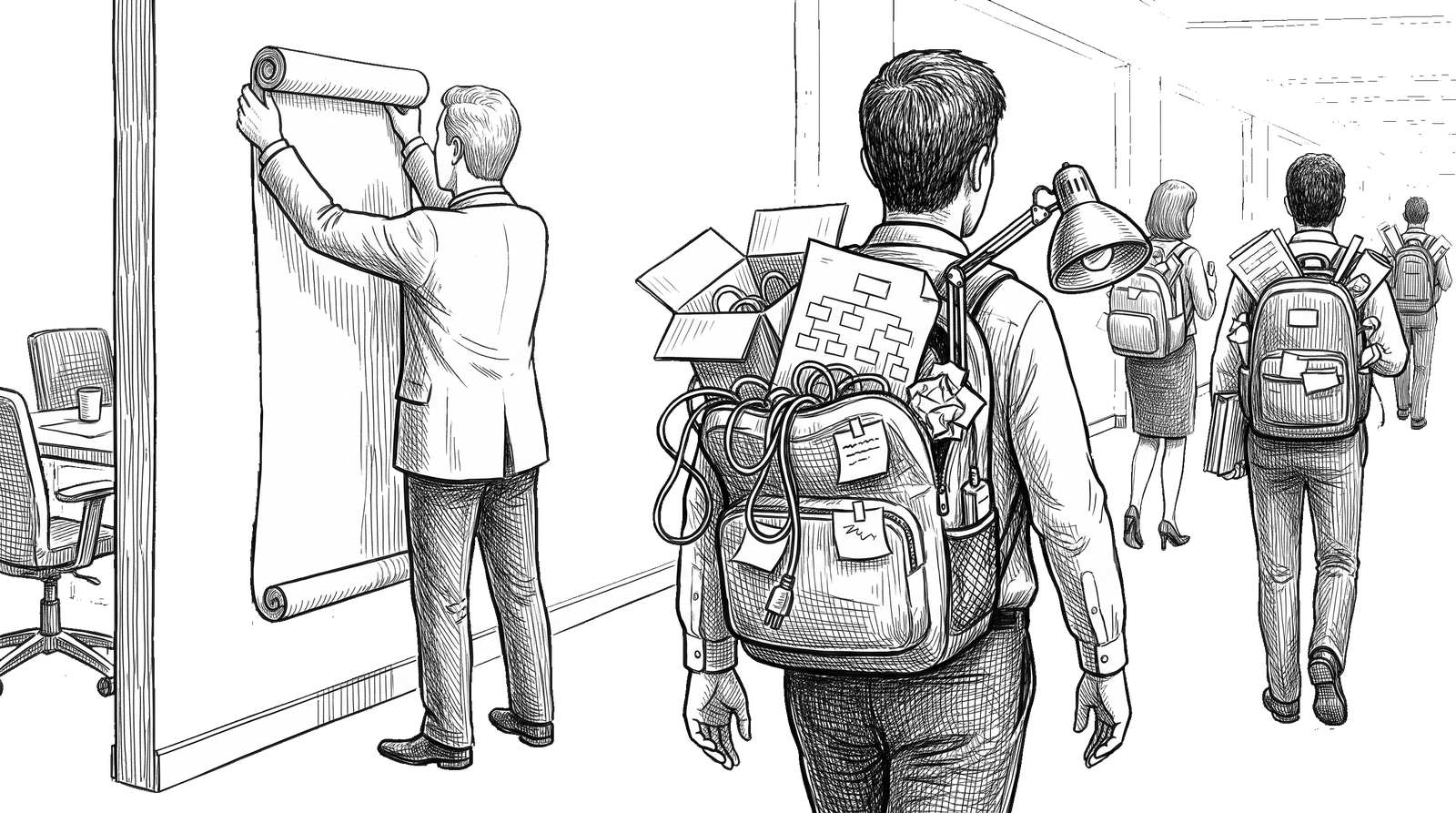
Change fatigue is the usual explanation when a team looks exhausted after a year of reorganizations, new tools and new leaders. New research from Wiley Workplace Intelligence suggests it is the wrong diagnosis. In a survey of more than 1,400 employees, the sheer amount of change explained only 4% of the variance in burnout. What mattered far more was whether earlier changes had been explained and properly closed.
What the research found
HR Dive covered the findings on November 4. Wiley calls the problem "change debt": the pile of changes that were announced, rolled out and never resolved. Whether past changes were explained and closed predicted burnout five times more strongly than how much change people went through. Unresolved problems from earlier changes weighed three times more heavily than uncertainty about changes still in progress.
The timing detail is the most useful part. More than half of respondents said their biggest recent change happened seven to twelve months ago. In other words, the stress people feel today is often not about this quarter's announcement. It is about a restructuring or a leadership change from last year that nobody ever finished explaining.
The researchers put it plainly: people adapt well when they understand what is happening and get a chance to move through it. The trouble starts when change does not get resolved, and leadership moves on to the next initiative anyway.
Why "less change" is the wrong fix
If you read this as "slow down the pace of change," you will miss the point. Most companies of a few hundred people cannot freeze. Markets shift, teams grow, tools get replaced. Trying to limit change also does nothing about the debt you already carry.
The research points somewhere more practical. A change is not finished when the new org chart is published or the new tool goes live. It is finished when the people affected know why it happened, what it means for their work, and that the problems it created have been dealt with. Until then, it stays open, and every new change stacks on top of it.
Think about a typical restructuring. The announcement goes out, the reporting lines move, and the project team declares success. Six months later, two teams still argue about who owns a process that used to sit between them. A few people never really understood why their manager changed. Someone's promotion path got murkier and nobody said so out loud. None of this shows up in the project report. All of it shows up in burnout.
Signs you are already carrying change debt
Change debt rarely announces itself. It shows up as background noise that leaders learn to ignore, so it helps to know what to listen for.
The first sign is that people still describe the company in "before and after" terms long after a change. If a team keeps saying "since the reorg" or "back when we had the old process" a year later, the change is still open for them. They are measuring everything against something that was never settled.
The second sign is orphaned work. After a restructuring, some tasks belong to nobody: a report someone used to produce, a vendor relationship that sat with a person who moved, an approval step that no longer has a clear owner. People quietly pick these up or let them drop. Either way, they add friction every week.
The third sign is cynicism about new announcements. When a new initiative lands and the reaction is a shrug or a joke about the last one, that is not resistance to change. It is a reasonable response from people who have learned that announcements do not get finished.
The fourth sign shows up in your data if you look. Engagement and pulse scores that dip after a change and never recover, while scores in unaffected teams stay flat, are a strong hint that a change is still unresolved in one part of the company.
How to close the loop on a change
You do not need a change management department to do this. You need three habits, each of them small.
Ask, then ask again. Run a short pulse survey right after a change and again six to eight weeks later. Three questions are enough: do you understand why this change happened, do you know what it means for your work, and is anything from it still unresolved for you. The second round matters more than the first. If the "unresolved" answers do not fall over time, the change is not closed, whatever the project plan says. We have written about why surveys only help if someone acts on them, and this is exactly the case where acting is cheap.
Put the change on the 1-1 agenda. Managers are the ones who hear what is actually unresolved, but only if they ask. Add a standing item to one-on-ones for a couple of months after a significant change: what is still unclear or still broken because of it. Write down the answers as action items and carry them forward until they are done. This turns vague frustration into a list someone owns.
Write down what changed and why. Every significant change deserves one page in the internal knowledge base: what changed, why, who decided, what it means for each affected team, and what is still open. It sounds bureaucratic, but it answers the question people keep asking each other in hallways and private chats. It also gives new hires the context that existing staff already have, so the debt does not get passed on to them.
The rule leaders keep breaking
Wiley's recommendation to leaders is simple: deal with what is unresolved from the last change before announcing the next one. It is also the rule most often broken, because new initiatives are more exciting than cleanup and nobody gets credit for closing out last year's reorganization.
Here is a practical version. Before any new change is announced, someone should be able to say which earlier changes are still open and what is being done about them. If the answer is "we don't know," that is the first problem to solve. Companies that skip this step lose more than energy. They lose credibility, because each new announcement lands on people who have learned that announcements are not followed through.
It is also worth watching the people who carry the most debt. High performers often absorb the fallout of half-finished changes quietly, picking up orphaned processes and filling gaps nobody assigned. We covered how that pattern turns into high-performer burnout long before anyone notices.
Where DTPulse fits
In DTPulse, pulse surveys run on a schedule with your own questions, anonymous by default, and results can be sliced by department and manager, so you can see whether a change is still open for one team and closed for another. One-on-one meetings keep a shared agenda and action items next to the employee's profile, and unfinished items carry over to the next meeting automatically, so "still unresolved" does not get lost between conversations. The knowledge base keeps the "what changed and why" pages in the same portal where people already look up the org chart and request time off.
None of this replaces leadership deciding to finish what it starts. It does make the debt visible, which is usually the moment someone decides to pay it down.
This week, list the three biggest changes your company went through in the past year. For each one, ask two people who were affected whether it feels finished to them. If the answers surprise you, you have found your change debt, and you know where the burnout is coming from.