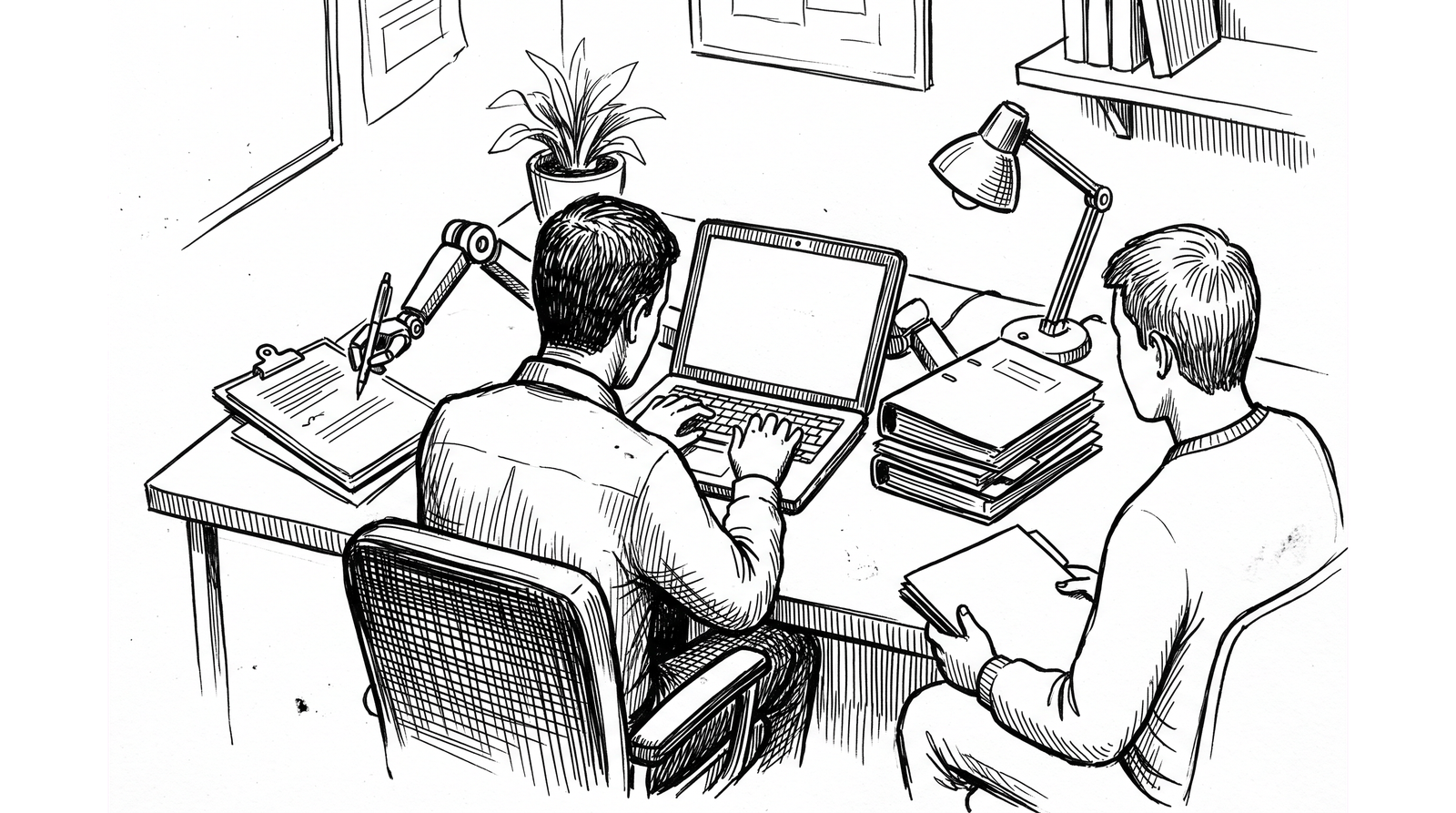
AI performance reviews are already the norm, and most employees have no idea. A new report from Highwire, covered by HR Dive on October 8, found that 78% of U.S. people managers used AI tools in the past 12 months to write employee feedback or a performance review. On the other side of the table, only 16% of individual contributors said they were told AI played a role in their most recent review.
That is a 62-point gap between what happened and what people know happened. And the report suggests the gap is doing damage.
What the survey found
Highwire, a performance coaching program from Knopman Marks, surveyed more than 300 managers and more than 700 individual contributors in August. The headline number is the 78%, but the employee side is more interesting.
Employees are split on whether AI made their feedback better. 54% said AI-generated feedback was more specific and actionable. 34% said it had become more generic, and 32% said it was less useful. So roughly half the workforce thinks the robot helped, and a third thinks it made things worse. That is about what you would expect from a tool that is good at structure and bad at knowing what actually happened last quarter.
The second finding is the one HR should worry about. More than half of employees said they can't make a mistake at work without it hurting their career. Two-thirds said they change their behavior to protect themselves. 27% avoid reasonable risks, 27% delay asking for help, 23% dodge hard assignments, 21% keep ideas to themselves and 16% hide or downplay mistakes.
Liza Streiff, CEO of Highwire and Knopman Marks, connected the two: "When employees suspect a tool shaped their review, and no one has told them how, playing it safe starts to feel like the smartest move."
Why secrecy is the real problem
Using AI to draft a review is not, by itself, a scandal. Most managers write reviews badly. They are rushed, they rely on the last three weeks of memory, and they fall back on the same five phrases for everyone. A tool that turns messy notes into clear sentences can genuinely help.
The trouble starts when the employee can't tell which parts of the review came from the manager's judgment and which came from autocomplete. A review is the one document where a person learns how the company sees them. If it reads polished but oddly generic, people start guessing. Did my manager actually think about my year? Did they paste in my self-assessment and press a button? Is the "needs to show more ownership" line about me, or is it what the model says about everyone?
Once people start guessing, they protect themselves. They stop taking the kind of risk that might look bad in a summary written by someone, or something, that doesn't know the context. Streiff put it plainly: "a good manager can tell the difference between a smart risk that didn't pay off and a careless mistake, but that takes context, and context is exactly what AI doesn't have."
That is the mechanism behind the behavior numbers. Hiding mistakes and holding back ideas are rational responses to an evaluation process that feels opaque. Opaque processes produce cautious employees. Cautious employees produce fewer surprises, good and bad.
What HR teams should do this cycle
Most companies are a few weeks away from year-end reviews. Here is what is worth doing before they start.
Write down a disclosure rule. It can be one paragraph. Managers may use AI to structure and edit, they may not use it to generate ratings, and every review states whether AI was used and for what. The point is not to ban the tools. The point is that 16% should become 100%. Highwire's own advice in the HR Dive piece is the same: make managers open about how AI was used, and put the saved time back into the conversation.
Separate the score from the prose. The rating should come from evidence a human can point to: goals met or missed, competencies observed, feedback from people who worked with the employee. The written summary can be AI-assisted. When the score and the text come from the same prompt, nobody can tell where judgment ended and generation began.
Get more than one source. A single manager's view, AI-polished or not, is a narrow window. Peer and cross-team input makes a review harder to fake and easier to trust. If three colleagues independently rated someone a 4 out of 5 on collaboration, the employee knows that score did not come out of a chatbot. We wrote about running 360 reviews that people don't dread, and most of the advice there applies here.
Collect evidence during the year. AI reviews go generic because the manager feeds them generic input. If there is a record of what the person actually did, monthly notes, project outcomes, peer feedback, there is something real for both the manager and the tool to work from.
Spend the saved time talking. If AI saves a manager two hours per review, that time should go into the meeting. A 45-minute conversation where the manager explains the reasoning beats a beautifully written document delivered in 15.
The counterintuitive part
You might expect employees to want less AI in their reviews. The data suggests something else. Half of them liked the AI-assisted feedback. What they object to is not knowing.
That mirrors what happens with any process people can't see into. Salary decisions, promotion criteria, layoff selection. The decision itself can be fair, but if the method is hidden, people assume the worst. Transparency does not require the process to be perfect. It requires people to understand it well enough to argue with it.
There is also a manager side to this. Managers who quietly use AI and get caught lose more trust than managers who openly say "I used a tool to help me structure this, the ratings and examples are mine." The second one sounds like someone who respects the employee's time. The first one sounds like someone cutting corners.
How we approach this in DTPulse
In DTPulse, reviews are built so that the score and the story have different sources. A 360 review collects ratings on a 1 to 5 scale per competency from the manager, peers and the employee, plus written comments. The employee sees results by competency, so a rating traces back to people who actually worked with them rather than to one document. Work reports add a running record through the year: what was done, how colleagues scored it, and what the median looks like over time. When review season arrives, the manager starts from evidence instead of a blank page.
None of this stops a manager from using AI to write the summary. It just makes the summary the least important part of the review. If you want to see how the pieces fit, start with what an employee portal actually covers.
Before your next review cycle, ask managers one question: did you use AI on any review last cycle, and did you tell the employee? If the answers look like Highwire's numbers, the fix is a one-paragraph policy and a habit of saying it out loud. That is cheaper than the alternative, which is a team that has learned to keep its head down.